
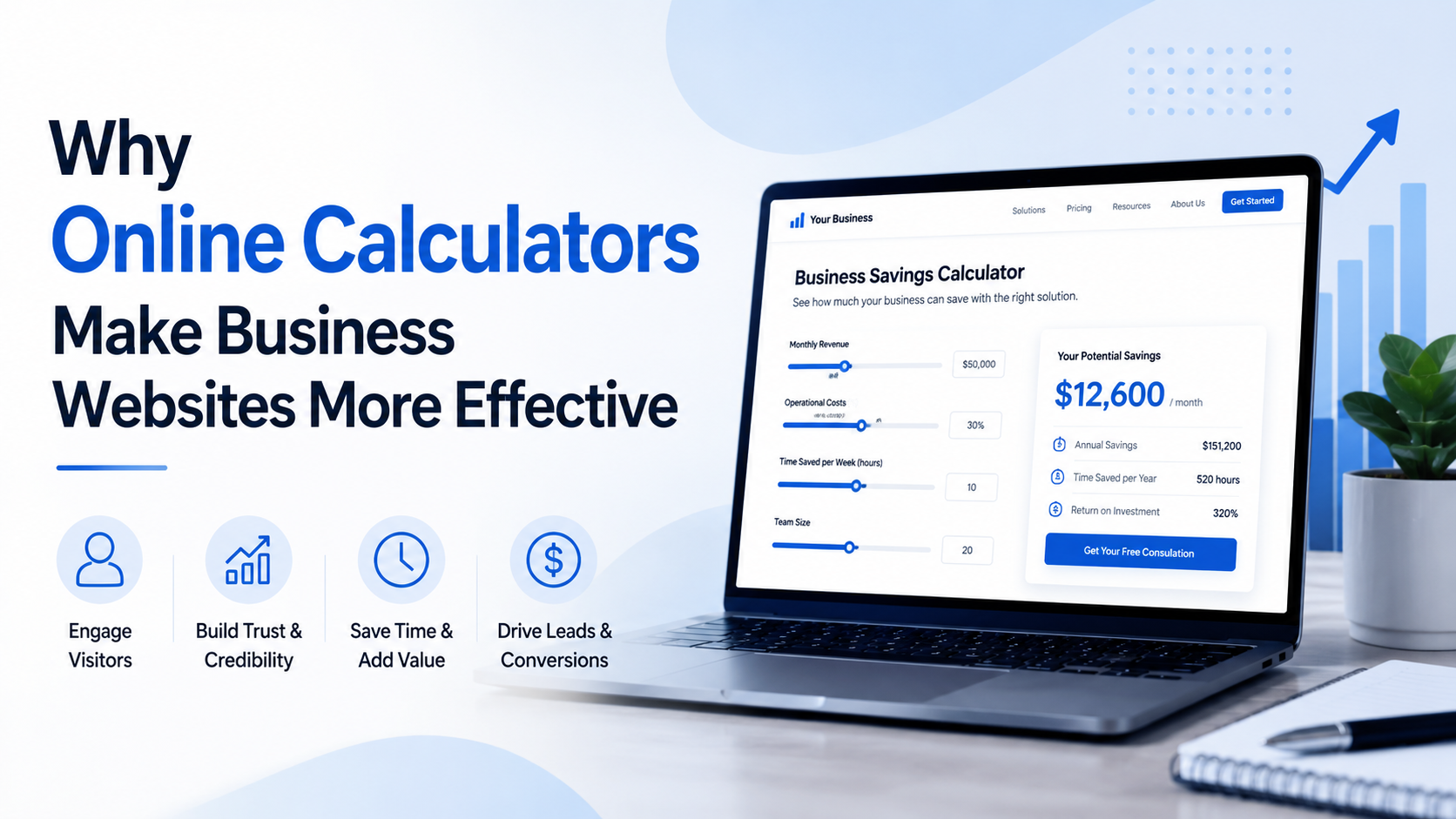
Why Online Calculators Make Business Websites More Effective
A business website should not only describe services. It should help visitors make decisions. This is one of the main reasons online calculators have become useful tools for service companies, agencies, consultants, local businesses, and online brands.
A calculator gives the visitor something practical: an estimate, comparison, recommendation, or personalized result. Instead of reading a page and leaving with unanswered questions, the user can interact with the website and move closer to contacting the company.
For many businesses, this simple change can turn a passive website page into an active lead-generation tool.
Online Calculators Answer the Question Customers Ask First
Before contacting a company, many customers want to understand one thing: “How much will it cost?”
This does not always mean they expect a final exact price. In many cases, they simply want a starting point. They want to know whether the service fits their budget, which package makes sense, or what factors affect the final quote.
An online calculator helps answer this question without forcing the visitor to call, wait for an email, or fill out a long form with no immediate feedback.
For example, a business website can use:
Cost calculators
Quote calculators
ROI calculators
Savings calculators
Delivery calculators
Project estimators
Package selection tools
Service configurators
When the calculator is well designed, it does not replace a sales conversation. It prepares the visitor for a better one.
A Calculator Can Improve Lead Quality
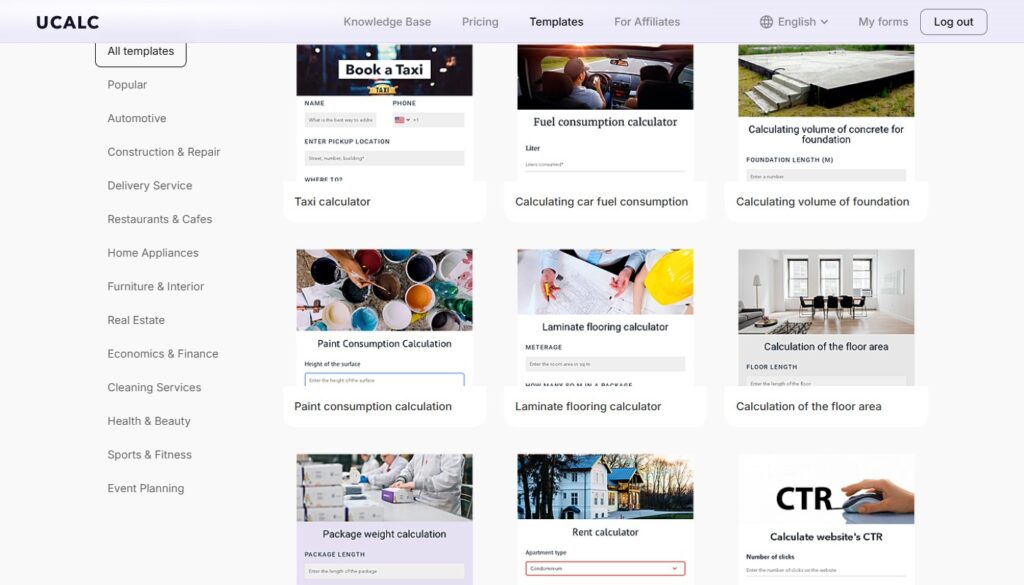
A basic contact form usually collects only a name, email, phone number, and message. That is often not enough for a business team to understand what the customer actually needs.
A calculator can collect more useful information in a natural way. The visitor enters project size, selected options, preferred service level, location, quantity, timeline, or other details that affect the estimate.
As a result, the business receives a more complete inquiry.
Instead of a vague message like “How much does this cost?”, the team can receive a structured request with the customer’s answers and calculated result. This makes follow-up faster, more relevant, and more professional.
For service businesses, this can save time on repeated questions. For sales teams, it can help prioritize serious leads. For customers, it makes the first step easier and more informative.
Interactive Tools Keep Visitors Engaged
Most website visitors scan pages quickly. If they do not find something useful or relevant, they leave. An online calculator gives them a reason to stay and interact.
This is important because interaction creates involvement. When a visitor enters information and receives a personalized result, the website becomes more than a brochure. It becomes a useful tool.
This can be especially valuable on landing pages, service pages, pricing pages, and advertising campaign pages.
A calculator can support the main content by helping the visitor understand:
which service option fits their situation;
how pricing may change depending on details;
what result they can expect;
how much time or money they may save;
what information is needed for a proper quote.
The more useful the interaction, the more likely the visitor is to continue toward a contact form, consultation request, order, or booking.
Calculators Make Pricing Easier to Explain
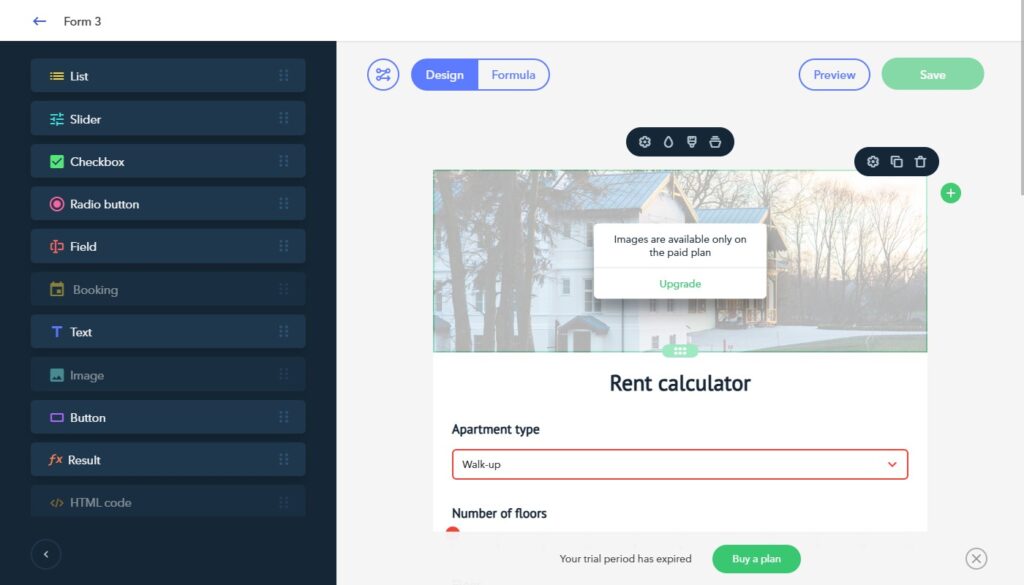
Many businesses cannot show one fixed price because every project is different. This is common for construction, repairs, marketing services, logistics, consulting, cleaning, moving, software, design, insurance, education, and many other industries.
However, hiding all pricing information can create friction. Visitors may leave because they do not know whether the service is affordable or relevant.
An online calculator solves this problem by showing an estimated range or starting point without promising a final quote.
For example, a calculator can show:
“Estimated project cost: from $850 to $1,200”
“Recommended package: Business Plan”
“Approximate monthly savings: $340”
“Your estimated quote will depend on final measurements”
This keeps the business protected from inaccurate fixed pricing while still giving the customer helpful information.
A Good Calculator Needs Clear Logic
The success of an online calculator depends on more than its appearance. The most important part is the logic behind it.
Before adding a calculator to a website, a business should define:
what the visitor wants to calculate;
which inputs are truly necessary;
which options affect the result;
how the formula should work;
whether the result should be exact, approximate, or range-based;
when contact details should be collected;
what call to action should appear after the result.
If this structure is unclear, the calculator may confuse visitors instead of helping them. That is why calculator planning is often just as important as the technical build.
At Harbor Glance, we focus on creating calculators that are simple for users, useful for businesses, and realistic for the sales process.
Where to Place a Calculator on a Website
A calculator should appear where it supports a real user decision. It does not need to be hidden on a separate page unless the calculator is the main feature of the website.
Good placement options include:
a service page where visitors compare pricing factors;
a landing page for paid ads;
a pricing page with custom packages;
a homepage section that introduces the tool;
a quote request page;
a blog article that explains costs or savings.
The calculator should also be surrounded by clear content. Visitors need to understand what the tool does, how accurate the result is, and what they should do next.
A short explanation before the calculator and a strong call to action after the result can make the tool much more effective.
Conclusion
Online calculators can make business websites more useful, more interactive, and more effective at generating qualified leads. They help visitors estimate costs, compare options, understand services, and take the next step with more confidence.
For businesses, calculators can improve lead quality, reduce repetitive questions, explain pricing more clearly, and support better conversion paths.
Harbor Glance helps companies plan and build online calculators, quote tools, estimators, and interactive website applications that fit naturally into their websites and business processes.